
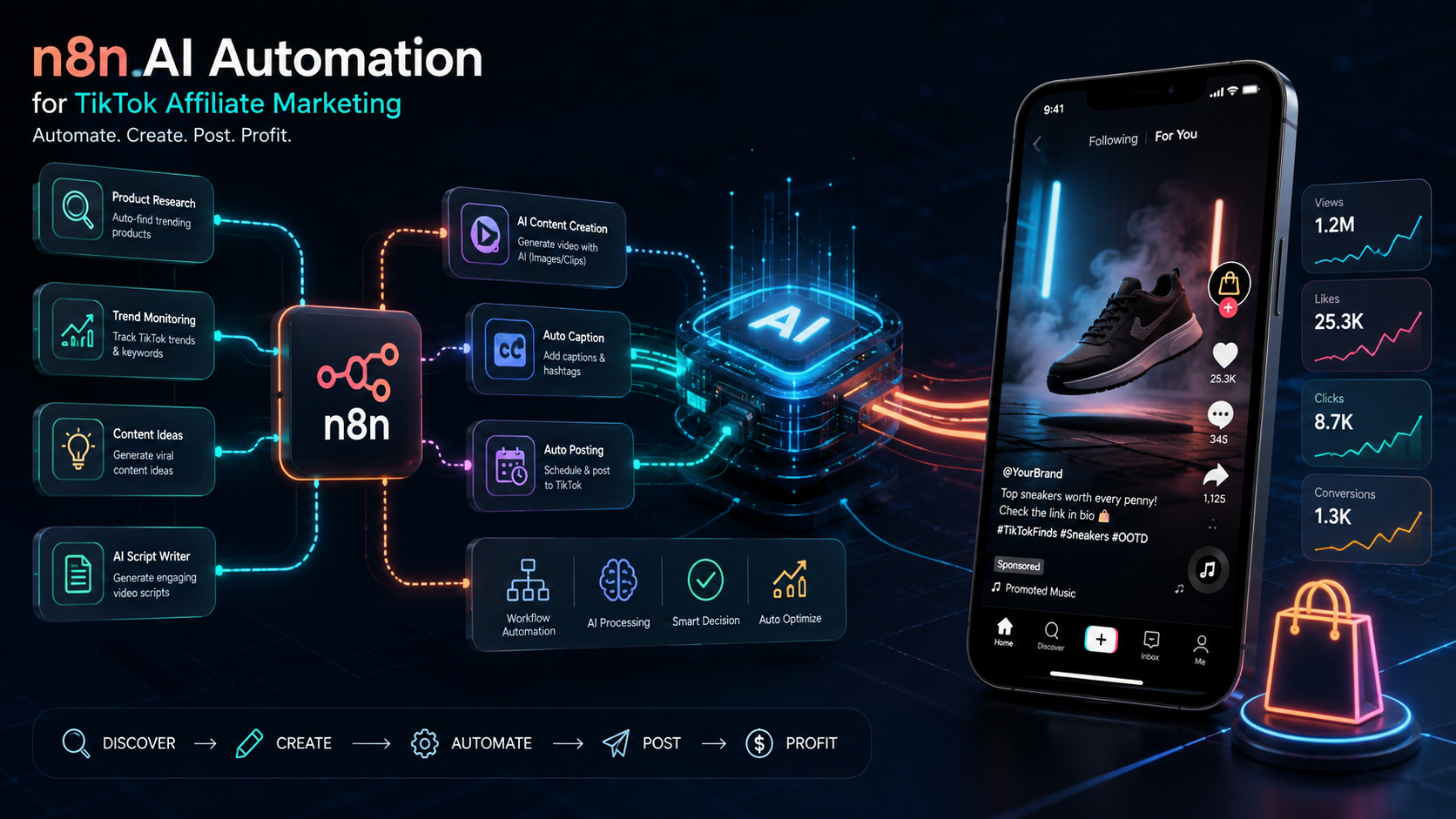
As an affiliate creator, the biggest wall I constantly hit—and I bet you run into it too—is running out of time and creative energy. Brainstorming daily visual concepts, locking down character poses, orchestrating micro-gestures, and editing short-form video content sucks up an enormous amount of daily bandwidth.
Last week, I decided to run a quick real-world experiment. I tried promoting a modest line of mukena (Islamic prayer robes) on TikTok using a fully automated AI system that autonomously handles character movement, posing, and visual gestures.
The result? The content converted into actual product sales shortly after hitting the platform.
Sure, maybe a tiny bit of luck played a role. However, this experiment proved one major thesis: building the right automation system slashes your manual workload down to almost zero.
In this article, I will break down my exact N8N AI Automation workflow, reveal my true operational cost structures, and share a clever workaround for handling AI motion glitches without draining your API budget.
Core Concept: Why I Chose Image-to-Video Over Text-to-Image
A lot of beginners make a fundamental mistake when integrating AI into affiliate marketing. They generate raw images directly from text prompts (Text-to-Image), and then force those AI images into videos.
In my personal testing, this text-first approach produces highly inconsistent visual assets. Worst of all, the physical product ends up looking noticeably different across frames—a total dealbreaker for affiliate conversions.
To solve this, I designed a strict Image-to-Video workflow:
- Character & Product Fusion: I pre-bake one core reference image by merging a base avatar with the actual product photo (in my case, a high-res mukena shot pulled straight from Shopee to preserve exact stitching and fabric details).
- Automated Pose Generation: Instead of generating concepts from scratch, the AI engine simply expands that single reference image into 6 to 8 brand-new pose variations and background settings.
- Flawless Visual Consistency: The product design and the avatar’s face remain 100% identical across every single output frame, giving the final TikTok video a clean, high-budget corporate feel.
If you want to build passive affiliate revenue but suffer from time constraints or lack advanced technical editing skills, I highly recommend adopting this workflow.
Under the Hood: Breaking Down the N8N Workflow Architecture
I split this architecture into two distinct pipelines and routed the main interface through Telegram so I can trigger and monitor the entire engine directly from my phone.
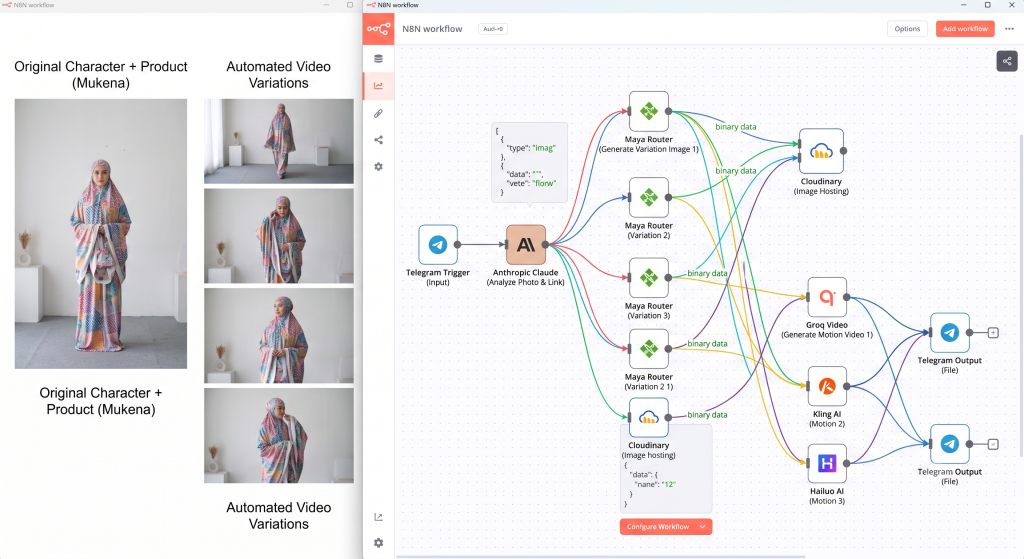
Workflow N8N AI-Automation illustration
Phase 1: Generating Consistent Image Variations
- The Trigger: I upload the base reference image (character + product) and paste the Shopee affiliate link into a lightweight Telly input form.
- Prompt Parsing: An Anthropic (Claude) node analyzes the visual parameters and the product URL. This engine acts as the central brain, auto-generating 6 to 8 distinct pose prompts.
- Rendering & Hosting: A Maya Router node renders those prompts into full-res images and hosts them temporarily inside Cloudinary before pushing them to my Telegram chat.
Phase 2: Transforming Static Images into Motion (Video Generation)
Once the 6 variation cards arrive in Telegram, I simply reply to the message on my phone. I pick my favorite pose image and select my preferred AI motion backend—such as Groq, Kling AI, or Hailuo (Huan).
Plus, within a few short minutes, a fully animated product video lands directly inside my Telegram chat, ready to upload.
Cost Transparency: Do You Need Expensive Monthly Subscriptions?
The single most common question creators ask me is: “Do I need to sink hundreds of dollars into expensive monthly SaaS subscriptions to run this?”
The short answer is no. This architecture operates entirely on a Pay-per-Use API model.
Because we tap directly into backend API endpoints (via official keys or authorized aggregators like Kling AI, Groq, or Atlas Code), you only pay for the exact compute time you consume.
- Low Initial Capital: You can start this entire setup by topping up a tiny $5 API balance.
- Ultimate Flexibility: That $5 balance stays active until you burn through it. Whether you spend it this week, next month, or late next year, your credits never expire. You completely avoid monthly recurring fees that bleed your margin.
Handling AI Glitches & Protecting Your API Credit Balance
Let’s be completely honest: no AI model operates with 100% perfection. While running this workflow, I occasionally hit weird motion glitches, warping artifacts, or choppy frame rates.
When a glitch happens, never re-run the entire N8N workflow from step one!
Re-triggering the initial pipeline wastes your API balance unnecessarily because Anthropic and Maya Router will force a brand-new, paid visual analysis of the raw inputs.
My Budget-Saving Workaround for Motion Glitches:
- Isolate the Motion Node: Isolate the dedicated video-generation node inside your N8N canvas.
- Use Partial Testing Triggers: Wire up a temporary execution trigger (like a simple File ID webhook) designed to isolate and read the binary data of the single corrupted image.
- Re-render Independently: Re-upload only the glitched image file and execute the motion pass individually using a single model API (e.g., re-running exclusively through Kling AI).
Here’s the kicker: By using this targeted micro-testing approach, you patch broken renders instantly without burning extra API tokens on upstream steps.
Final Thoughts
Based on my firsthand experience building and stress-testing this system, an N8N AI Automation workflow represents an exceptionally high-value asset for digital marketers.
On top of that, while you face a slight initial learning curve when setting up API keys and routing logic, the long-term operational efficiency is insane. Generating a dozen high-converting affiliate assets with a single tap on your phone completely changes the creator game.
Are you ready to build your own automated affiliate engine? Drop your thoughts, technical questions, or workflow ideas in the comments section below!
I am is an AI Author & Practitioner specializing in AI workflow automation, prompt engineering, and digital productivity. I help solopreneurs and content creators streamline their operations using practical, real-world AI strategies