
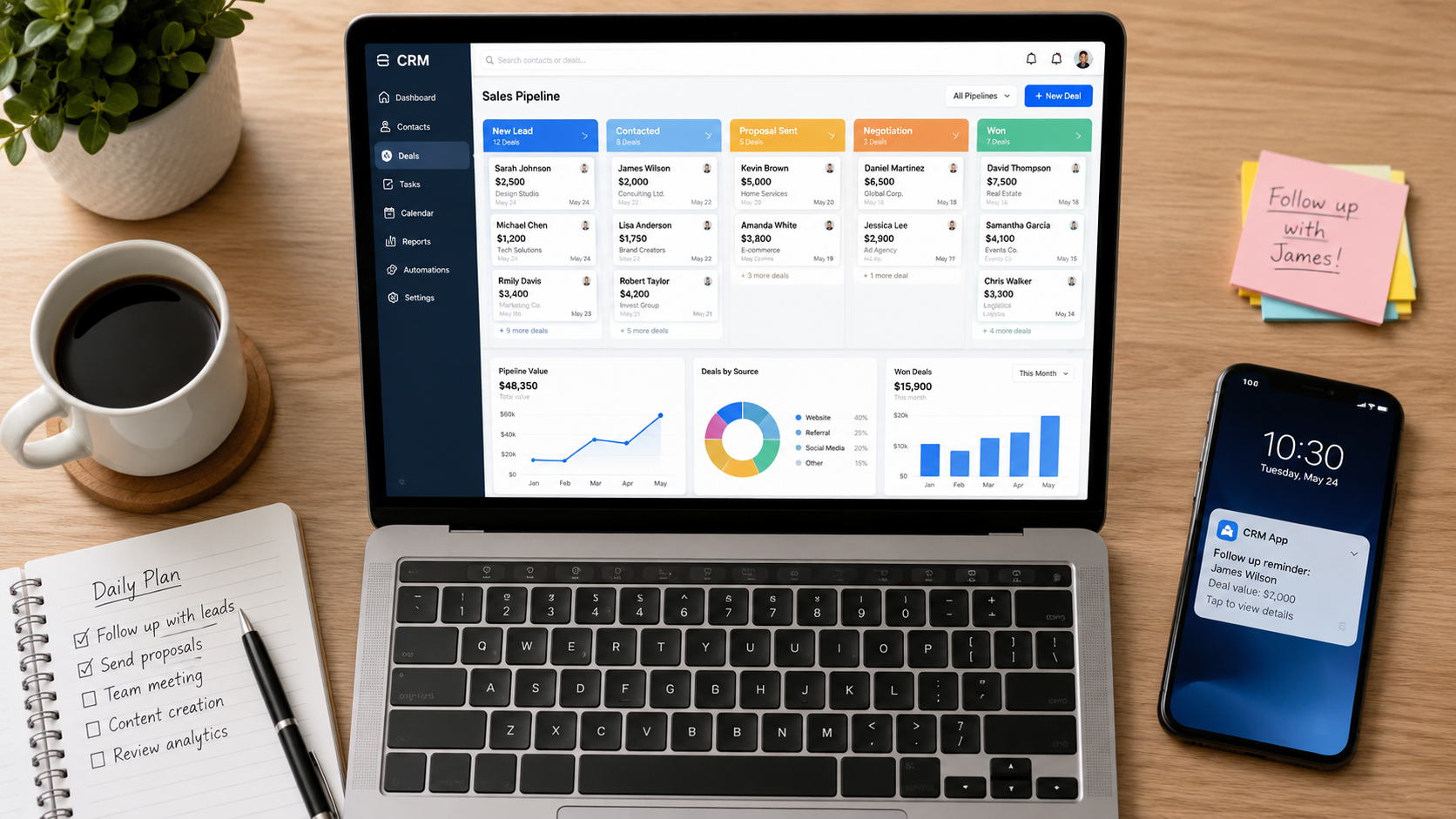
Most solopreneurs start their business journey on a shoestring budget. They dump client contacts into WhatsApp chats, bury leads under unread emails, mess around with Google Sheets, or simply rely on pure memory.
This makeshift system works just fine when you manage a modest 10 to 20 clients.
However, the moment your lead list explodes, your manual system collapses. You quickly face a mountain of operational headaches:
- You miss crucial follow-up calls.
- You lose track of vital client conversation histories.
- You struggle to identify your highest-value prospects.
- Your entire sales pipeline turns into a chaotic mess.
This exact bottleneck makes a Customer Relationship Management (CRM) platform one of the smartest investments you can make as a solopreneur.
You don’t need a bloated, enterprise-level price tag to get results. Today, dozens of intuitive tools offer robust free tiers that easily handle a growing solo business.
In this guide, I will break down the absolute best CRM software for solopreneurs based on ease of use, feature sets, pricing, and long-term scalability.
What Is a CRM?
A CRM acts as your central command center, consolidating every client touchpoint into a single dashboard.
With a solid CRM, you can easily:
- Store detailed customer profiles.
- Track active sales leads in real time.
- Automate follow-up reminders.
- Manage visual sales pipelines.
- Archive full communication histories.
- Monitor your overall revenue performance.
Simply put, a good CRM ensures that no valuable lead ever slips through the cracks.
Why Every Solopreneur Needs a CRM
Many business owners mistakenly believe that CRMs belong exclusively to corporate sales teams.
Here’s the kicker: Solopreneurs actually gain the biggest competitive edge from CRM automation.
When you run an entire company completely by yourself, every minute counts. A reliable CRM eliminates tedious administrative tasks, freeing you up to close deals and deliver top-tier client services.
You will immediately enjoy these practical wins:
- You maintain hyper-consistent client follow-ups.
- Your customer database stays clean and organized.
- You monitor sales health at a glance.
- Your client interaction looks remarkably professional.
- Your closing rates skyrocket.
Top 7 CRM Platforms for Solopreneurs in 2026
1. HubSpot CRM
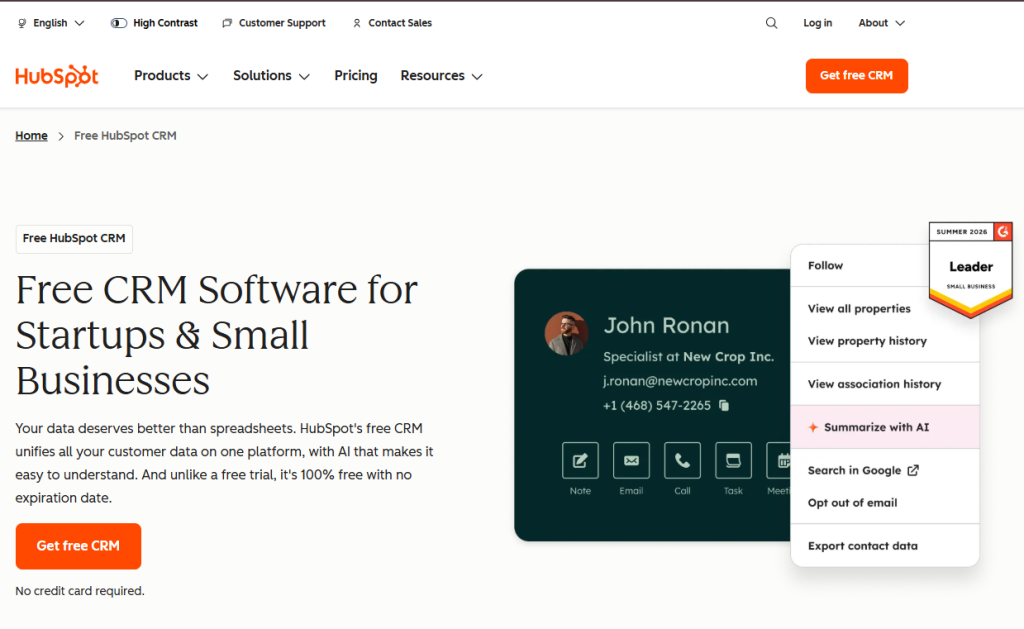
- Best Suited For: Beginners looking for a feature-packed, completely free CRM stack.
HubSpot leads the global CRM market because it offers an extraordinarily generous free-forever plan.
- Key Features: Unlimited contact storage, visual sales pipelines, email tracking, web forms, live chat, and reporting dashboards.
- The Pros: ✅ Extremely intuitive interface. ✅ Massive app ecosystem. ✅ Scales with your business from day one.
- The Cons: Paid upgrade tiers get expensive quickly as your team grows.
2. Pipedrive
- Best Suited For: Freelancers and service providers hyper-focused on closing deals.
Pipedrive features a sleek, drag-and-drop visual pipeline that makes tracking deals feel effortless.
- Key Features: Visual pipelines, sales automation, follow-up alerts, email integration, and revenue forecasting.
- The Pros: Super easy to master. Keeps your focus strictly on driving revenue. Eliminates clutter for new users.
3. Zoho CRM
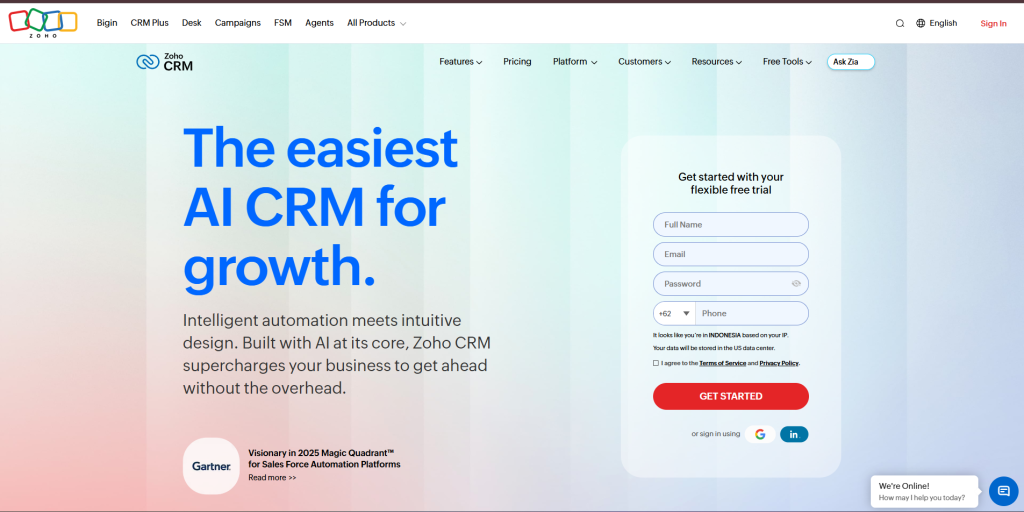
- Best Suited For: Solopreneurs who want advanced automation at an affordable price point.
Zoho packs an impressive array of high-end enterprise features into an unexpectedly budget-friendly package.
- Key Features: Lead scoring, sales automation, custom workflows, email marketing, analytic dashboards, and an AI assistant named Zia.
- The Verdict: If you plan to scale your solo venture rapidly, Zoho easily adapts to your growing workload.
4. Notion CRM
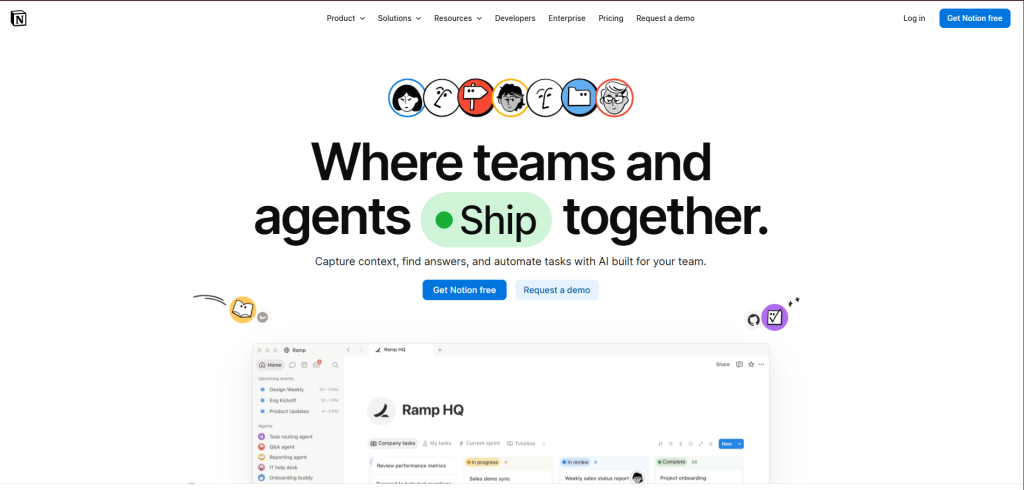
Not every CRM needs to be a dedicated software suite. On top of that, thousands of solopreneurs build custom CRM databases directly inside Notion.
You can design a lightweight system to track:
- Client names & WhatsApp contacts
- Email addresses
- Deal stages & transaction values
- Follow-up schedules
- Custom meeting notes
The beauty of Notion lies in its raw flexibility—you build the exact workflow you want without paying extra fees.
5. Monday CRM
Monday stands out for its vibrant, modern interface and simple board views.
Beyond sales tracking, you can use Monday for project management, team collaboration, workflow automation, and client onboarding. Plus, if you ever plan to hire a small team down the road, Monday makes that transition seamless.
6. Freshsales
Freshsales, part of the Freshworks ecosystem, seamlessly bridges the gap between sales pipelines and customer support.
- Key Features: AI lead scoring, email tracking, built-in cloud telephony, visual pipelines, and automated chat.
- The Verdict: Ideal for service-based solopreneurs who handle high volumes of direct client calls and support tickets daily.
7. Salesforce Starter
While Salesforce traditionally targets massive corporations, their Salesforce Starter package offers a streamlined, highly affordable entry point for small businesses.
- Key Features: Complete lead-to-opportunity tracking, built-in email marketing, vast integration options, and an unrivaled tech ecosystem.
- The Verdict: If you are building a long-term company with big expansion plans, Salesforce Starter deserves a serious look.
Solopreneur CRM Comparison Matrix
| CRM Platform | Best For | Ease of Use |
| HubSpot CRM | Beginners needing free tools | ⭐⭐⭐⭐⭐ |
| Pipedrive | Pure sales pipeline focus | ⭐⭐⭐⭐⭐ |
| Zoho CRM | Advanced features on a budget | ⭐⭐⭐⭐ |
| Notion CRM | Fully customizable databases | ⭐⭐⭐⭐⭐ |
| Monday CRM | Project management + CRM | ⭐⭐⭐⭐ |
| Freshsales | Integrated support & phone | ⭐⭐⭐⭐ |
| Salesforce Starter | High-growth, long-term scaling | ⭐⭐⭐ |
Must-Have CRM Features for Solo Operators
When shopping for software, don’t buy into flashy features you will never touch. Focus on these five essential tools:
- Contact Management: A centralized database that lets you pull up client profiles instantly.
- Visual Sales Pipelines: Clear board views that show exactly where every prospect stands in your funnel.
- Automated Follow-up Reminders: Native alerts that prompt you when a lead turns cold.
- Email Integration: Automatic sync tools that log email threads directly under client profiles.
- Simple Dashboards: Clean reporting widgets that display monthly revenue without manual spreadsheet updates.
Free vs. Paid CRMs: Which Should You Pick?
If you are just launching your business, starting with a free plan makes total financial sense.
I recommend testing these options first:
- HubSpot CRM (for robust free features)
- Notion (for total workflow control)
- Zoho CRM Free Tier (for simple contact management)
As your active client roster grows and your workflows get more complex, you can easily upgrade to paid plans to unlock advanced analytics and automated email sequences.
Smart Tips for Choosing the Right CRM
Before entering your credit card details, keep these ground rules in mind:
- Choose a tool that feels natural to open and use every single day.
- Verify that the platform offers a fully functional mobile app.
- Ensure it integrates smoothly with your existing tools (Gmail, WhatsApp, Stripe, etc.).
- Avoid paying for bloated features you don’t need right now.
- Test free trials thoroughly before committing to an annual billing plan.
Remember: The best CRM isn’t the one with the longest feature list—it’s the one you actually use.
Final Thoughts
CRMs are no longer reserved for corporate sales teams. For solopreneurs, a clean CRM forms the bedrock of customer retention and sustainable sales growth.
If you are just getting started, HubSpot CRM offers a brilliant, risk-free launchpad. If your primary goal centers on closing deals fast, Pipedrive delivers an unbeatable visual experience. For advanced automation on a budget, look closely at Zoho CRM. And if you love total layout freedom, Notion has you covered.
Pick the tool that removes friction from your workday, answers your daily client questions, and helps you build stronger, more profitable business relationships.

I am is an AI Author & Practitioner specializing in AI workflow automation, prompt engineering, and digital productivity. I help solopreneurs and content creators streamline their operations using practical, real-world AI strategies