
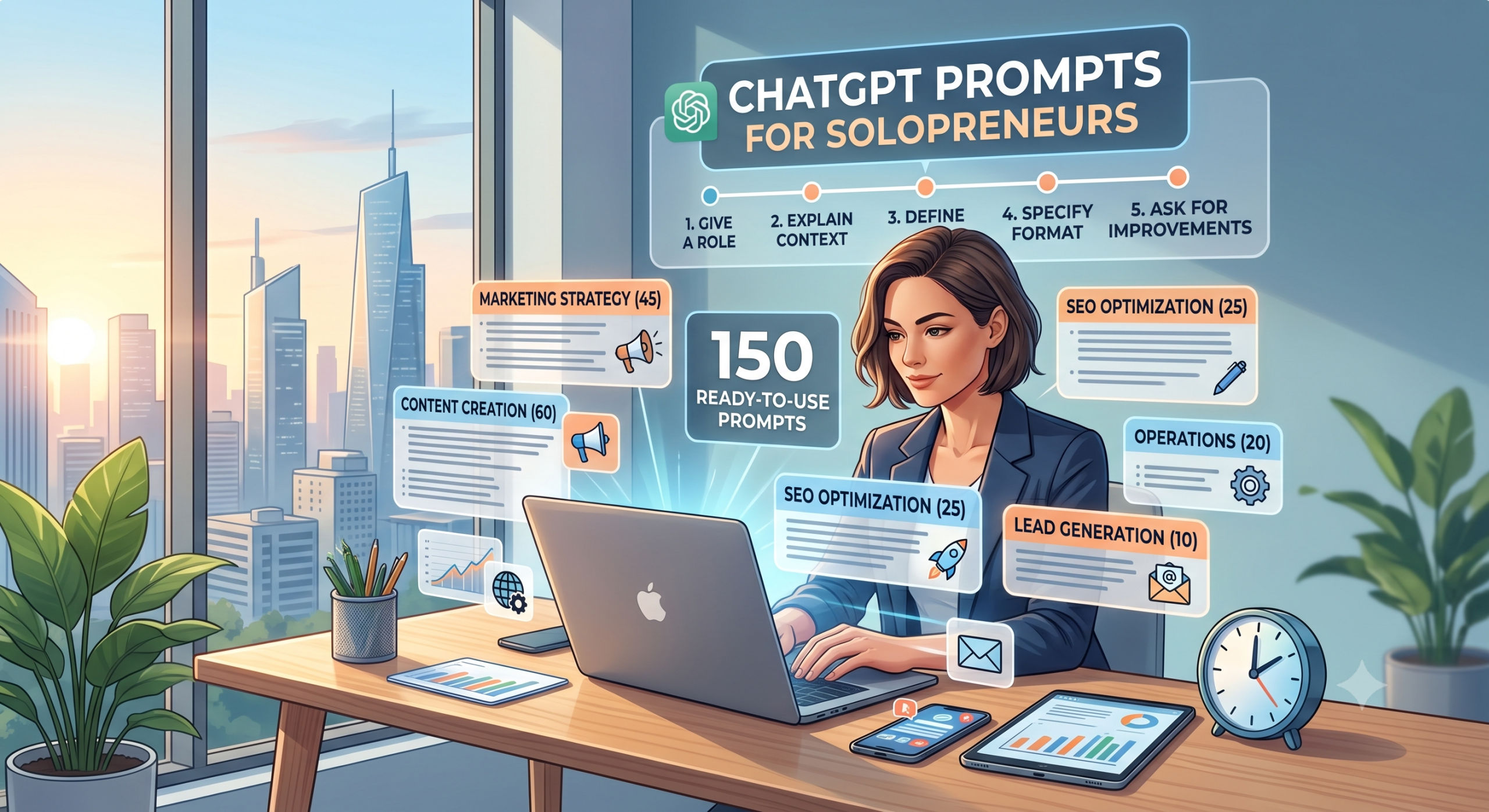
Nowadays, the entry barrier for launching an online business has never been lower, but the requirements for keeping that business alive have become incredibly high. As a solopreneur, you routinely find yourself forced to wear ten different hats at once—acting as the copywriter, the media buyer, the customer support agent, and the operational strategist all in the same afternoon.
Artificial intelligence tools like ChatGPT can significantly reduce this daily operational workload. However, that benefit is only achievable if you master the exact framework required to communicate effectively with large language models.
This is where prompt engineering comes into play. A precise, structured prompt transforms ChatGPT from a generic conversational chatbot into a highly reliable business partner capable of handling advanced visual layouts, market research, and sales copy.
This guide compiles battle-tested ChatGPT prompt frameworks, broken down by core business tasks. These are not lazy, generic text snippets copied from social media loops; they are pragmatic templates engineered specifically for solo founders, independent creators, and micro-SaaS builders looking to maximize their output.
Why Instruction Quality Trumps the AI Model
Most people operate under the default assumption that upgrading to the absolute latest AI model will automatically solve all their content problems. However, across real-world marketing applications, the quality of your instructions matter far more than the underlying engine parameters.
Think of ChatGPT as a highly skilled, senior corporate employee. If you hand them a lazy directive like “Write a Facebook post about my business,” they will give you a boring, generic, and completely forgettable response.
To extract human-grade work, you must feed the engine five core pillars of information: role, context, task, constraints, and output format. Observe the massive shift in output quality between these two prompt approaches:
- The Weak Prompt:
“Write a business case study about my marketing service.” - The High-Converting Prompt:
“Act as an elite conversion copywriter specializing in B2B SaaS marketing. Review the raw client notes attached below. Write a 45-second vertical social media video script detailing how we helped a real estate client reclaim 2 hours of daily manual admin work using simple automation workflows. The tone must be pragmatic, approachable, and end with a question to drive audience comments. Do not use corporate jargon.”
The second prompt gives the engine clear boundaries. Defining your target audience, tone, hooks, and layout constraints before generating copy yields a massive improvement in your final creative assets.
The Master 5-Part Prompting Framework
Whenever you are building a new automation workflow or drafting copy inside ChatGPT, use this universal structural blueprint to eliminate generic responses:
1. ROLE: Define the exact expert persona (e.g., SEO Consultant, Chief Marketing Officer).
2. CONTEXT: Explain your current operational setup, target audience, and business model.
3. TASK: Explicitly state the asset you need generated (e.g., landing page hero copy, weekly SOP).
4. CONSTRAINTS: Enforce strict boundaries (e.g., paragraph length limits, banned hype words).
5. FORMAT: Specify the final structure (e.g., markdown tables, bullet points, interactive FAQs).
Phase 1: High-Converting Marketing & Audience Strategy Prompts
The absolute biggest drain on a solo founder’s capital is marketing to an undefined audience. Use these pre-built text modules to clarify your unique selling proposition (USP), profile your buyer personas, and design high-converting visual funnels.
1. The Ideal Customer Profile (ICP) Blueprint
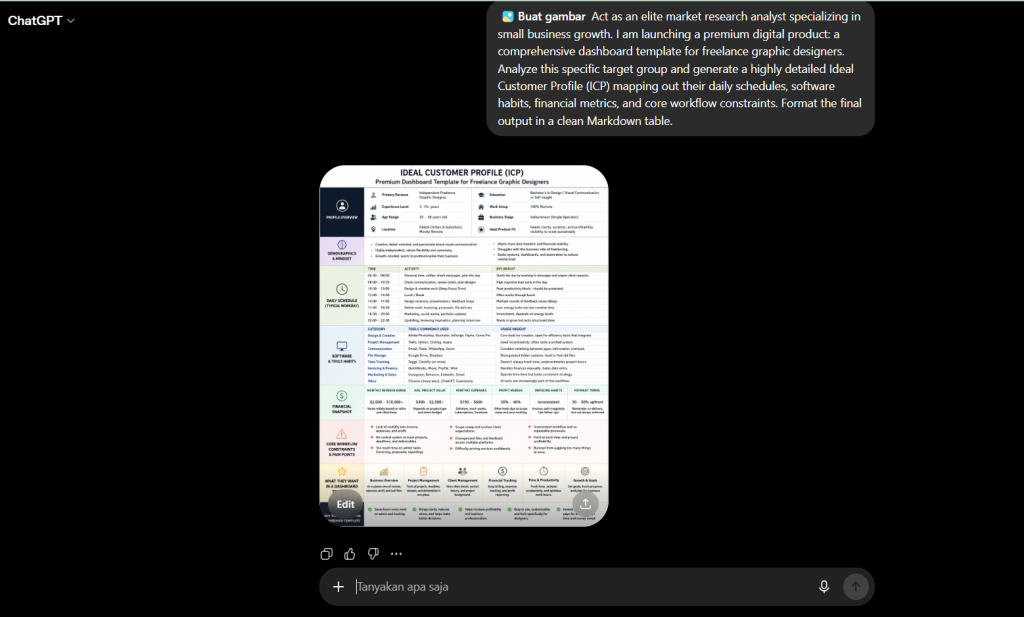
Act as an elite market research analyst specializing in small business growth. I am launching a premium digital product: a comprehensive dashboard template for freelance graphic designers. Analyze this specific target group and generate a highly detailed Ideal Customer Profile (ICP) mapping out their daily schedules, software habits, financial metrics, and core workflow constraints. Format the final output in a clean Markdown table.
2. Uncovering Hidden Niche Pain Points
You are a conversion optimization strategist. Analyze the ICP generated above and compile a prioritized list of the top 15 deeply frustrating operational pain points my target audience experiences daily regarding lead nurturing and client retention. Rank them from highest to lowest urgency, and explain the emotional trigger behind each frustration. Avoid generic corporate buzzwords.
3. Competitor Content Gap Audit
Act as a senior SEO content strategist. Benchmark my new micro-SaaS tool (an automated invoice tracker for independent writers) against the top 3 mainstream tools in this space. Identify the specific content topics, user search intents, and marketing angles that these major competitors are completely overlooking. Suggest 10 high-value topic clusters I can target to build immediate authority.
Phase 2: Content Creation & On-Page SEO Prompts
Producing high-quality search-optimized blog posts, email newsletters, and social assets is crucial for building long-term traffic. These templates ensure your content satisfies both human readability and search engine algorithms.
1. The Structured E-E-A-T Blog Outline Generator
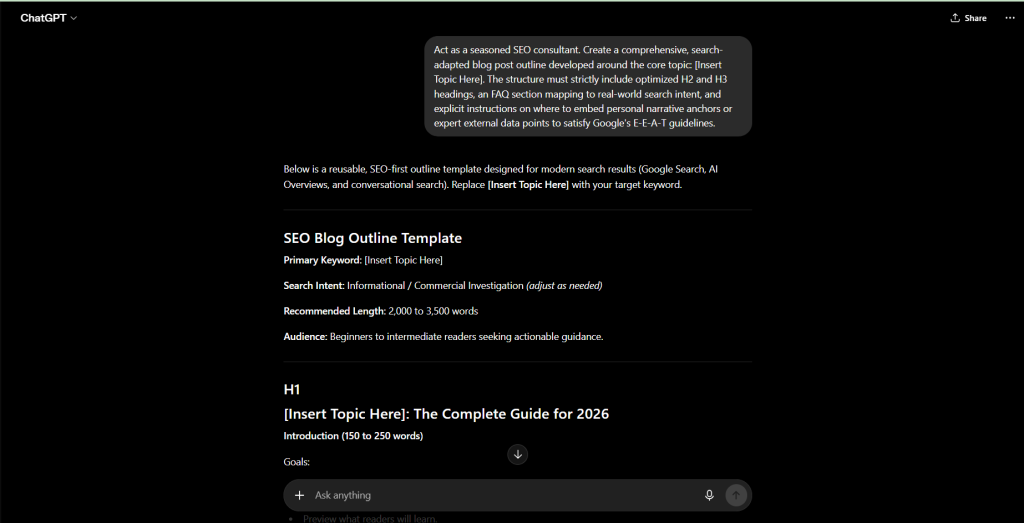
Act as a seasoned SEO consultant. Create a comprehensive, search-adapted blog post outline developed around the core topic: [Insert Topic Here]. The structure must strictly include optimized H2 and H3 headings, an FAQ section mapping to real-world search intent, and explicit instructions on where to embed personal narrative anchors or expert external data points to satisfy Google's E-E-A-T guidelines.
2. Multi-Channel Content Repurposing Engine
You are an expert multi-channel digital copywriter. Review the complete blog post text attached below. Repurpose this single piece of long-form content into an omnichannel marketing campaign consisting of:
- 1 conversational email newsletter introduction with a high-open subject line.
- 3 distinct, professional LinkedIn updates targeting industry peers.
- 1 punchy X (Twitter) thread consisting of 5 highly scannable, value-driven posts.
Enforce a clean, authentic, and non-robotic tone throughout.

Blog Post Text: [Paste your text here]
3. Visual Search Meta Optimization
Act as an on-page SEO expert. Review the following headline and section text. Generate 5 attention-grabbing web meta descriptions that are strictly limited to 155 characters or fewer to maximize click-through rates. Additionally, provide descriptive image filenames and descriptive Alt Text for 3 visual assets that will support this page's layout.
For creating visual assets to pair with your copy, check out my guide on AI Image Prompts for Solopreneurs or my comparison of the Best AI Image Generators in 2026.
Phase 3: Sales Copy, Customer Support, & Retention Prompts
Attracting inbound web traffic is only half the battle. To build a sustainable solo business, you must convert those visitors into high-paying customer advocates.
1. The Pragmatic B2B Sales Outreach Sequence
Act as an expert B2B outbound sales writer using a non-aggressive, value-first narrative framework. Draft a personalized 3-part cold outreach email sequence addressed to potential freelance clients. Focus entirely on highlighting a massive hidden pain point (e.g., hours lost to manual invoice collection) and showing real financial metrics. Avoid all typical sales hype words like "revolutionary" or "game-changing."
2. Empathic Reputation Management (Negative Review Response)
You are a customer success manager for a premium digital templates store. Draft a polite, deeply empathetic, and constructive response to a public negative review left by a frustrated customer. Acknowledge their technical issue, explain our clear refund and resolution protocol, and ensure the brand sounds helpful, transparent, and completely human.
Phase 4: Operational Efficiency & Business Strategy Prompts
Solo builders need to make dozens of strategic business decisions every single day. Use ChatGPT as an internal advisor to prioritize your schedules, map your roadmap, and build scalable systems.
1. Eisenhower Matrix Task Prioritization Workflow
Act as a high-performance business coach. I am going to paste my disorganized, messy weekly to-do list below. Categorize my entire task list using the Eisenhower Matrix framework, separating items into four clear distinct zones based on real urgency and long-term business impact. Highlight the top 3 high-leverage activities I must focus on today to move the needle.

Messy To-Do List: [Paste your list here]
2. The Standard Operating Procedure (SOP) Builder
You are an operations manager specializing in business systems automation. Create a highly detailed Standard Operating Procedure (SOP) template for my weekly content production pipeline. The SOP must lay out clear step-by-step instructions, define what tasks can be handed off to AI tools, specify exactly where human human oversight is required for quality control, and list the core metrics needed to evaluate performance.
Common Prompting Pitfalls to Avoid
- Feeding the Engine Zero Context: Writing a lazy prompt like “Write a business article” is the fastest way to receive generic, forgettable text. Always describe your business model, target buyer, and formatting rules upfront.
- Cramming Multiple Massive Objectives Into One Prompt: Forcing ChatGPT to write an email, plan a product launch, compile analytics, and audit competitors simultaneously creates intense visual and logical chaos. Break your tasks down. Execute your workflow step by step to maintain premium quality.
- Accepting the Very First Draft Unedited: AI outputs are meant to be fast first drafts, not finished public products. Always follow up with iterative feedback commands like: “Condense the intro,” “Remove the passive voice phrases,” or “Inject a personal tone into paragraph three.”
FAQ
Will using AI-assisted copy penalize my website’s organic SEO rankings?
No. Google’s automated search systems evaluate content based on its unique value, originality, clarity, and relevance to search intent—not the specific tools used to write it. To secure high search visibility, ensure you review your AI drafts, inject real-world case studies, optimize the layout, and verify all technical claims before hitting publish.
Can ChatGPT fully replace experienced marketing copywriters?
Absolutely not. ChatGPT functions as a powerful efficiency lever, not a replacement for human strategic thinking. While AI handles structural outlines, text variations, and fast drafts at scale, the human founder must remain the strategic director—handling target audience empathy, real brand positioning, and unique personal storytelling.
How often should I update my internal prompt library?
You should audit and refine your prompt files every quarter. As your online business model expands, your product offerings scale, and your core buyer personas evolve, your prompt strings must be fine-tuned to reflect those shifts in your market dynamics.

I am is an AI Author & Practitioner specializing in AI workflow automation, prompt engineering, and digital productivity. I help solopreneurs and content creators streamline their operations using practical, real-world AI strategies